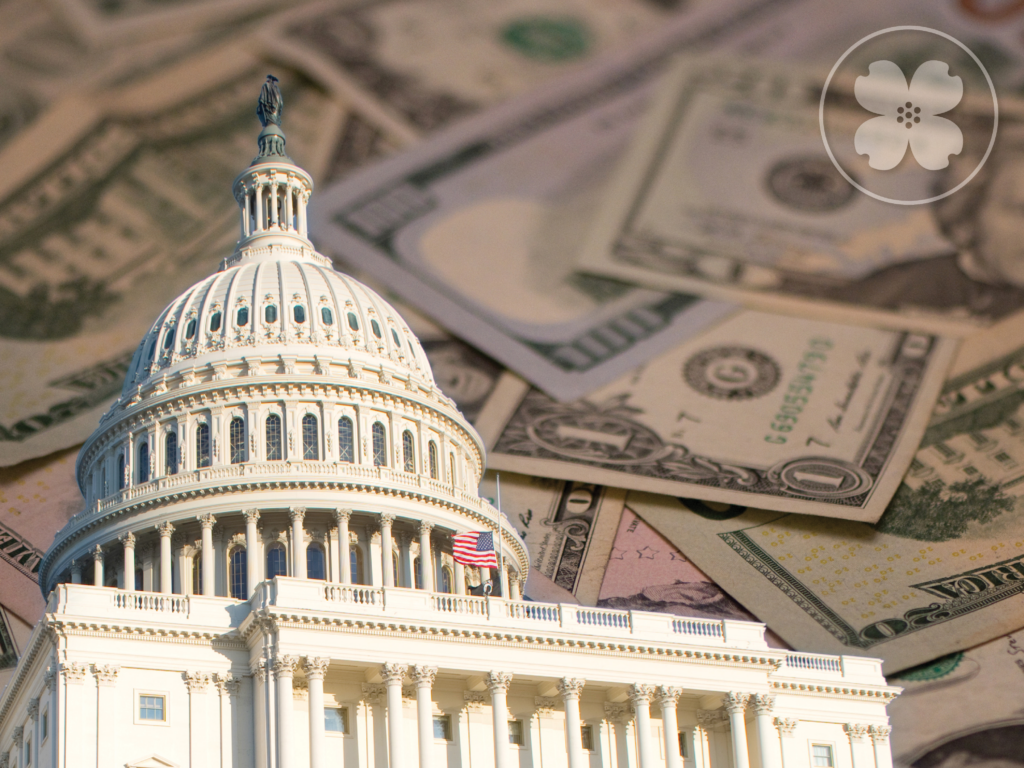
Although the summer is heating up, investors felt a little cooler in June. Concerns regarding new Federal Reserve Chair Kevin Warsh’s future plans to reduce inflation, AI spending, and the on-again, off-again nature of the war in Iran sent the S&P 500 Index down -0.95% for the month.
AI Optimism Meets Rising Spending Concerns
Investors continue waffling back and forth between the future promise of Artificial Intelligence (AI) and the massive impact to free cash flow. While many believe that AI will increase productivity and usher in a new era, the cost today is simply enormous, with no real slowdown in sight.
To fund the buildout, companies are issuing more stock and debt, diluting current shareholders and creating leverage. Alphabet, Google’s parent company, issued $85 billion in stock in June, while Nvidia and SpaceX issued a combined $50 billion in debt during the month.
SpaceX IPO Fuels Bubble Debate
SpaceX made history with the largest IPO in history. The IPO has been noted by skeptical investors as the potential hallmark of a bubble. Elon Musk has defied expectations and proved doubters wrong in his career, but to debut at a roughly $2 trillion market cap left more than one analyst scratching their heads. IPOs from OpenAI and Anthropic are expected in the next few weeks as they look to tap the public markets so they can continue funding AI expansion.
Semiconductor Stocks Remain Hot Despite Valuation Questions
Semiconductor stocks and computer hardware companies continue to be on fire this year, even with high valuations. However, on a forward-looking basis, assuming analyst estimates of earnings come to fruition, many of these companies look cheap. The big question, of course, is whether the earnings estimates will hold up.
Small and Mid Cap Stocks Outperform Large Caps
The S&P MidCap 400 and S&P SmallCap 600 fared better than the U.S. large cap benchmark, returning 3.59% and 7.29% for the month, respectively. Smaller companies have more favorable valuations than larger peers in many sectors, attracting investor attention. While we anticipated good returns for smaller companies this year, the change in expectations toward interest rate increases rather than cuts makes it surprising that performance has been so strong. The small cap index is up 23.9% halfway through the year, while the midcap index is up 17.34%.
Continued strength in consumer spending, reduced oil prices, and improved consumer sentiment could continue to propel these stocks forward.
Foreign Markets Move Lower Amid Inflation and Rate Pressures
Foreign markets followed large cap U.S. stocks lower for the month. The S&P Developed Ex-U.S. Broad Market Index and S&P Emerging BMI returned -1.50% and -2.40% for the month, respectively. Oil and energy price increases, inflation, and political issues pushed indexes lower for the month. Interest rate increases from the Bank of Japan, the European Central Bank, and the Central Bank of Brazil also weighed on markets. Australia and Norway raised rates earlier in the year. These rate increases to slow inflation are a different approach than the U.S. Fed, which has allowed inflation to run hot.
Bond Market Gains as Investors Assess New Fed Leadership
The S&P U.S. Aggregate Bond Index returned 0.57% for the month. New Fed Chair Kevin Warsh gave investors their first real glimpse into his approach and his plans to reshape the Federal Reserve. As widely expected, the Fed left interest rates unchanged at his first FOMC meeting. Investors are also adjusting to Warsh’s preference for less forward guidance and reduced Fed communication, a notable departure from the transparency-focused approach that has characterized much of modern Fed policy.
At the end of the month, the Supreme Court ruled that Fed Governor Lisa Cook could not be fired immediately, although the lower courts are still working through her case. Initially, the ruling provided a bit of relief to markets that new administrations could not make the institution overtly political.
Precious Metals Struggle Against a Stronger Dollar
Precious metals have continued to struggle with a stronger dollar. The GSCI Precious Metals Index decreased -12.91% during the month. With the price of oil dropping, there could be a reduced need for dollars going forward, which could work in precious metals’ favor as the dollar starts to weaken.
Summer Heat Brings Hope for Hotter Returns
El Niño is expected to bring the heat this summer; investors are hopeful that some of that heat transfers into stronger returns.
Investment Commentary by Jason Flores, CFA, CAIA – Executive Vice President & Chief Investment Officer at Central Trust Company.
At Central Trust Company, we continue to reassess the rapidly changing investment landscape for both risks and opportunities. If you would like to access our full monthly outlook and additional investment commentary, visit our Investments Learning Center. As always, if you have questions or concerns, please contact your Central Trust Company team. We are always ready to help.